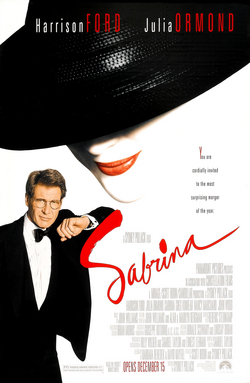
Unveiling the Timeless Charm of Sabrina (1954)
Long before modern romantic dramedies captivated audiences with intricate love triangles and societal pressures, there was Billy Wilder's cinematic masterpiece,
Sabrina (1954). This enchanting black-and-white film not only etched itself into the annals of Hollywood history but also continues to inspire contemporary stories, most notably Jenny Han's hit series *The Summer I Turned Pretty*. Starring the unparalleled Audrey Hepburn, Humphrey Bogart, and William Holden, *Sabrina* is more than just a classic movie; it's a witty, swoon-worthy exploration of class, ambition, self-discovery, and the unexpected twists of the heart.
This article delves into the intricate plot of this romantic gem, highlights its legendary cast, uncovers its enduring influence, and even touches upon how its titular name continues to spark comparisons across different facets of popular culture today. Prepare to be charmed by a film that proves true love often appears in the most surprising packages.
Sabrina's Captivating Plot: A Tale of Love, Transformation, and Society
At its heart, *Sabrina* tells the Cinderella-esque story of Sabrina Fairchild (Audrey Hepburn), the shy and often overlooked daughter of the wealthy Larrabee family's chauffeur. From childhood, Sabrina harbors a deep, unrequited crush on David Larrabee (William Holden), the charming, carefree younger son of the family, a notorious playboy who barely notices her existence. David lives a life of leisure, constantly flitting between social events and romantic entanglements, seemingly oblivious to anything beyond his immediate pleasure.
Desperate to escape her position and the heartache of her unrequited love, Sabrina embarks on a two-year journey to Paris to attend a prestigious culinary school. This pivotal period abroad proves to be transformative. In Paris, Sabrina sheds her timid demeanor, cultivates a sophisticated sense of style, and gains a newfound confidence and savoir-faire. She returns to Long Island not as the invisible chauffeur's daughter, but as a strikingly elegant and self-possessed young woman.
Her transformation is so complete that upon her return, David is instantly smitten, failing to recognize her as the girl who once watched him from afar. This newfound attention, however, creates a significant problem for the Larrabee family's older, pragmatic brother, Linus (Humphrey Bogart). Linus, a driven and shrewd businessman, is in the midst of orchestrating David's advantageous marriage to Elizabeth Tyson, a wealthy heiress whose family business ties are crucial for a lucrative Larrabee merger. David's sudden infatuation with Sabrina threatens to derail these carefully laid plans.
In a desperate attempt to keep David and Elizabeth's engagement on track, Linus takes it upon himself to distract Sabrina. His initial intention is purely strategic and business-driven – he plans to woo her himself, then send her back to Paris. However, as Linus spends more time with Sabrina, he unexpectedly finds himself falling for her. What begins as a calculated manipulation slowly blossoms into genuine affection, challenging his own jaded worldview and revealing a softer side beneath his austere exterior.
This evolving dynamic creates a poignant and humorous love triangle, forcing Sabrina to confront her initial infatuation with David against the unexpected, deeper connection she forms with Linus. The film masterfully explores themes of class distinction, the superficiality of wealth, and the journey of self-discovery, all wrapped in Billy Wilder's signature blend of wit and warmth. The plot offers practical insights into how first impressions can be misleading and how true connection can emerge from the most unlikely circumstances. For more on the film's enduring themes, explore
Sabrina Movie Legacy: Unpacking the Original Romantic Dramedy.
The Iconic Trio: Cast and Unforgettable Performances
The success of *Sabrina* is undeniably tied to the brilliant performances of its lead actors, each a legend in their own right, who brought depth and nuance to their complex characters.
*
Audrey Hepburn as Sabrina Fairchild: Hepburn's portrayal of Sabrina is a masterclass in subtlety and transformation. She effortlessly transitions from the awkward, hopelessly smitten girl to the elegant, self-assured woman, embodying the film's central theme of metamorphosis. Her innate charm, delicate beauty, and ability to convey vulnerability alongside burgeoning strength made Sabrina an iconic role. Her fashion, designed by Hubert de Givenchy, also became legendary, cementing her status as a style icon.
*
Humphrey Bogart as Linus Larrabee: Bogart, known for his tough-guy roles in film noir, delivered a surprisingly tender and understated performance as Linus. His casting was initially met with skepticism due to his age difference with Hepburn, but he perfectly captured Linus's gruff exterior, sharp intellect, and ultimately, his hidden romantic heart. Bogart’s portrayal allows the audience to witness Linus's slow, reluctant fall into love, making his transformation as compelling as Sabrina's.
*
William Holden as David Larrabee: Holden perfectly embodied the charming, irresponsible playboy David. He brought an undeniable charisma and a touch of boyish immaturity to the role, making his initial appeal to Sabrina entirely understandable. His performance serves as a crucial counterpoint to Bogart's Linus, highlighting the differences between superficial attraction and profound connection.
The chemistry, though unconventional, between these three actors is palpable, driving the emotional core of the film and making their respective character arcs genuinely compelling.
Beyond the Screen: Sabrina's Legacy and TSITP Inspiration
*Sabrina* (1954) holds a significant place in cinematic history, not just as a beloved romantic dramedy, but as a foundational text for many stories that followed. Its themes of social climbing, class differences, individual transformation, and the classic love triangle have resonated with audiences for decades.
One of the most notable modern inspirations is Jenny Han's wildly popular book series and Amazon Prime Video adaptation, *The Summer I Turned Pretty* (*TSITP*). Fans of *TSITP* will immediately recognize the narrative parallels: a young girl (Belly Conklin) who has grown up alongside two brothers (Conrad and Jeremiah Fisher), harbors an unrequited crush on one (Conrad), but finds herself increasingly drawn into a complex love triangle involving both. Just as Sabrina leaves for Paris and returns a changed woman, Belly’s summers at Cousins Beach mark her transformation from an overlooked girl into a young woman who captures the attention of both brothers. The dynamic of the reserved, brooding older brother and the charming, more outwardly affectionate younger brother is a direct echo of the Linus/David dynamic. This timeless narrative structure speaks to universal experiences of first love, self-discovery, and navigating complicated family ties.
The film's exploration of personal growth and the realization that true love may not be what you initially expected also contributes to its enduring legacy. It encourages viewers to look beyond superficial attractions and consider the depth of character and genuine connection.
Sabrina's Enduring Appeal: From Classic Romance to Modern Comparisons
In an era where names often carry multiple associations, it's fascinating how a name like "Sabrina" can span generations and genres. While many searching for "sabrina carpenter comparaison" might be looking for details on the acclaimed pop artist Sabrina Carpenter – a modern icon known for her catchy music, sharp lyrics, and engaging stage presence – it's an interesting exercise to note how the name itself evokes different forms of captivating artistry across generations.
The 1954 film *Sabrina* and the artist Sabrina Carpenter, though separated by over half a century and entirely different mediums, both represent distinct forms of entertainment that capture the public's imagination. While there's no direct narrative or biographical link between the movie and the singer, the common thread is the powerful impact a "Sabrina" can have on her audience. Just as the film's Sabrina underwent a remarkable transformation that captivated her world, Sabrina Carpenter's career showcases a continuous evolution, from her acting roots to her current reign as a pop sensation.
For those whose search for "sabrina carpenter comparaison" accidentally leads them to this classic film, it offers a wonderful opportunity to discover the roots of timeless storytelling. The film's enduring appeal lies in its sophisticated script, the magnetic performances, and its elegant portrayal of romance. It serves as a reminder that tales of self-discovery, unexpected love, and challenging societal norms are perpetually relevant, whether told through the silver screen of the 1950s or the vibrant pop anthems of today. It’s a testament to the power of a compelling character, regardless of the era or platform. For those eager to watch this classic, you can find practical guidance on
Where to Stream Sabrina: Discover the Classic Audrey Hepburn Film.
Why Sabrina (1954) Still Resonates Today
Decades after its release, *Sabrina* (1954) remains a beloved film for a multitude of reasons. Its sharp dialogue, penned by Billy Wilder, Ernest Lehman, and Samuel A. Taylor, sparkles with wit and intelligence. The film's aesthetic – from the exquisite Parisian backdrops to Audrey Hepburn's iconic Givenchy wardrobe – is a feast for the eyes and continues to influence fashion and design. Beyond its surface charms, *Sabrina* offers a timeless narrative about finding oneself, challenging social expectations, and recognizing that love isn't always where you first look. It’s a powerful reminder that true connection transcends superficialities and often requires us to open our hearts to the unexpected. The film’s blend of humor, romance, and genuine emotional depth ensures its place as a perennial favorite, a must-watch for anyone who appreciates classic Hollywood storytelling.
In conclusion, *Sabrina* (1954) is far more than just a historical film; it's a living, breathing testament to the enduring power of romance, transformation, and wit. With its legendary cast, a plot that continues to inspire, and a legacy that spans generations, it invites viewers to fall in love with its characters and its story again and again. Whether you're drawn by its historical significance, its fashion, or its connection to modern love stories, *Sabrina* offers a rich and rewarding cinematic experience that truly stands the test of time.